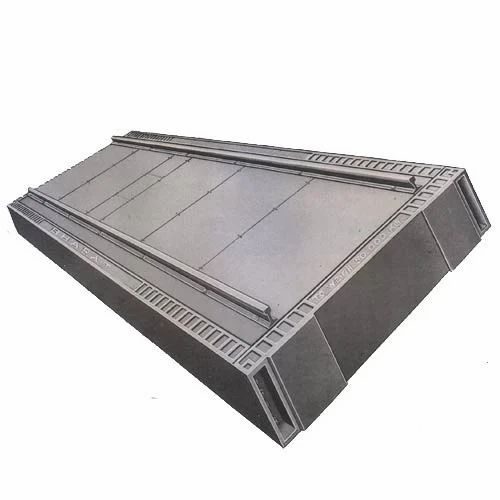
Mechanical Weighbridge
A mechanical weighbridge is a type of weighing equipment that uses mechanical components, such as levers and springs, to measure the weight of a vehicle or other heavy objects. Mechanical weighbridges have been in use for many decades and are still widely used today, although newer electronic weighbridge technologies have become more prevalent. Mechanical weighbridges typically consist of a platform, which is supported by a series of levers and springs, and a mechanical indicator, which displays the weight of the object on the platform. When a vehicle is driven onto the platform, the weight of the vehicle compresses the springs and causes the levers to move, which in turn moves the indicator needle to display the weight. Mechanical weighbridges are known for their durability and reliability, and are often used in harsh environments such as mines and quarries, where electronic weighbridges may not be practical due to the risk of damage or failure from dust, moisture, or other factors. One disadvantage of mechanical weighbridges is that they are typically less accurate than electronic weighbridges, as the mechanical components can wear and become less precise over time. They also require regular maintenance and calibration to ensure accurate readings. Mechanical weighbridges are available in a range of sizes and weight capacities to accommodate different types of vehicles and objects, and can be either above ground or pit-mounted. They are still commonly used in many industries today due to their simplicity and reliability.